How to Calculate the Circumference of a Circle (4 Simple Methods)
Find the circumference of any circle from its radius, diameter, or area. Clear formulas, step-by-step worked examples, and a free calculator to check your answer.
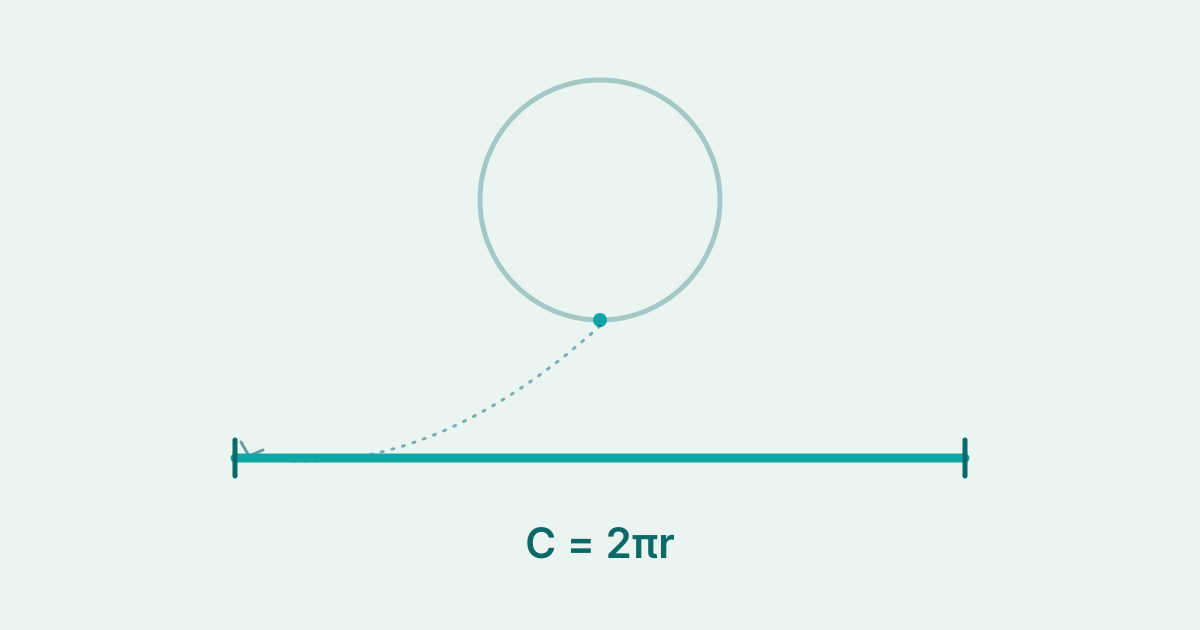
The circumference of a circle is the distance all the way around its edge. If you could unroll a circle into a straight line, the length of that line would be its circumference. It’s the same idea as the perimeter of a square — just for a round shape.
As an architect, I reach for this number constantly: the trim around a circular window, the railing on a curved balcony, the tiling along the edge of a round pool. The good news is that you only ever need one measurement to find it. Here are the four ways to get there, from the most common to the most hands-on.
The two formulas you actually need
Every method below comes from one of these two formulas:
C = 2πr — circumference equals two times pi times the radius.
C = πd — circumference equals pi times the diameter.
Both give the exact same answer, because the diameter is just twice the radius (d = 2r). Which one you use depends on which measurement you already have.
A quick word on π (pi): it’s the fixed ratio between a circle’s circumference and its diameter, roughly 3.14159. It goes on forever, but 3.14159 is precise enough for almost any real task. (The calculator on this site uses pi to full precision, so your answers stay accurate to as many decimals as you need.)
Method 1: From the radius
The radius is the distance from the center of the circle to its edge. If you know it, use C = 2πr.
Example. A round table has a radius of 5 feet.
C = 2 × 3.14159 × 5 = 31.42 feet
So you’d need about 31.42 feet of edging to wrap the table once.
Method 2: From the diameter
The diameter is the distance straight across the circle, passing through the center. It’s the measurement you most often get in the real world, because it’s easy to measure with a ruler or tape. Use C = πd.
Example. A 16-inch pizza means the diameter is 16 inches.
C = 3.14159 × 16 = 50.27 inches
That’s the length of crust running around the whole pizza.
Method 3: From the area
Sometimes you know how much space a circle covers but not its radius or diameter. You can still find the circumference. The shortcut formula is:
C = 2√(πA) — two times the square root of (pi times the area).
Example. A circular garden bed covers 50 square meters.
C = 2 × √(3.14159 × 50) = 2 × √157.08 = 2 × 12.53 = 25.07 meters
If you’d rather not deal with the square root by hand, this is exactly the kind of conversion the circumference calculator handles in one step — type in the area, and it gives you the circumference, radius, and diameter together.
Method 4: By measuring with string
When a circle isn’t perfectly drawn — a tree trunk, an old column, a hand-thrown pot — there are no neat numbers to plug in. The oldest method still works: wrap a piece of string snugly around the object, mark where it overlaps, then lay the string flat against a ruler. The length you measure is the circumference.
This is genuinely useful on site. I’ve measured the circumference of existing columns this way to work backward and find their diameter (just divide your measurement by pi), so a new design matches what’s already standing.
A real-world walkthrough
Say you’re edging a circular reflecting pool with decorative tile, and the only thing on the drawing is the radius: 4 meters.
- Use the radius formula: C = 2πr
- Plug in: C = 2 × 3.14159 × 4
- Calculate: C = 25.13 meters
You’d order about 25.13 meters of edging tile — plus a little extra for cuts and waste, which any builder will tell you to always add.
Quick reference
Here’s the short version, depending on what you start with:
- Have the radius? → C = 2πr
- Have the diameter? → C = πd
- Have the area? → C = 2√(πA)
- Have a physical object? → measure with string
To skip the arithmetic entirely and check your work, the free calculator lets you enter any one of these values and instantly see the other three, in metric or imperial units.
Frequently asked questions
What is the formula for the circumference of a circle? There are two standard formulas: C = 2πr (using the radius) and C = πd (using the diameter). Both give the same result.
Do I need the radius or the diameter? Either one works. If you have the radius, use C = 2πr. If you have the diameter, use C = πd. Since the diameter is twice the radius, you can always switch between them.
What value of pi should I use? For everyday and most professional work, 3.14159 is precise enough. For exact answers, use the pi button on a calculator or a tool that carries full precision.
How do I find circumference from the area? Use C = 2√(πA). First multiply pi by the area, then take the square root, then double it.
What’s the difference between circumference and perimeter? Circumference is simply the perimeter of a circle. “Perimeter” is the general word for the distance around any shape; “circumference” is the specific word we use when that shape is a circle.
Related posts

Circumference vs. Perimeter: What's the Difference?
Circumference and perimeter both measure the distance around a shape. Here's the simple difference, when to use each word, and how to calculate both.
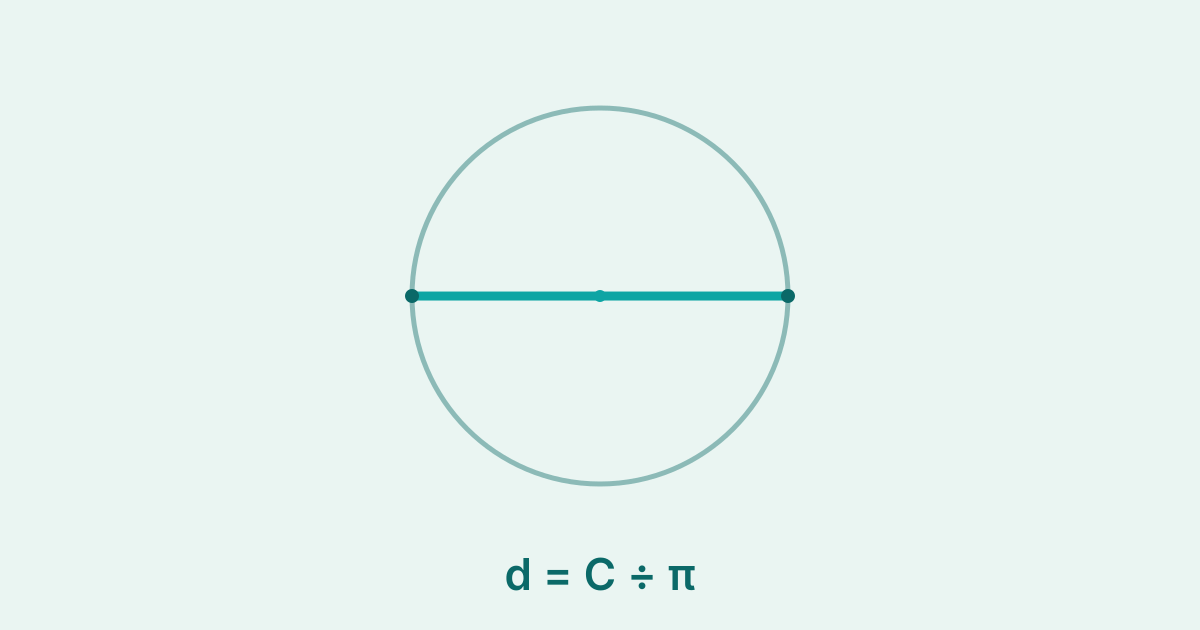
How to Find the Diameter From the Circumference
Reverse the circle formula to find diameter from circumference. The simple equation, worked examples, and a free calculator to do it instantly.
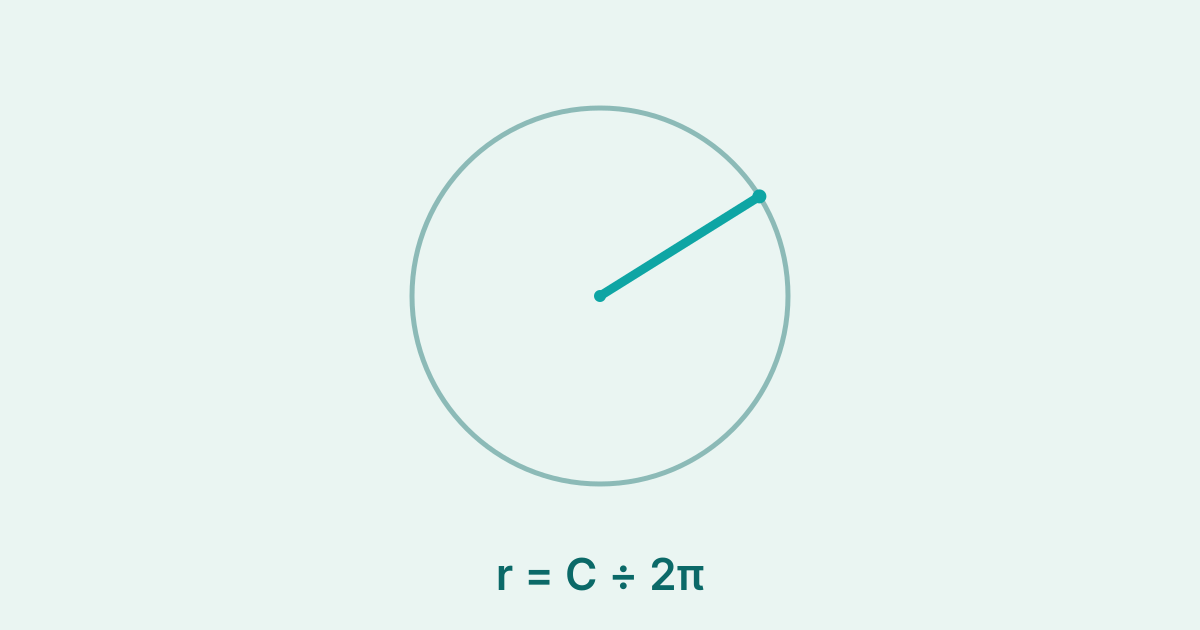
How to Find the Radius From the Circumference (With Examples)
How to find the radius from the circumference using r = C ÷ (2π). Simple steps and worked examples, plus a free calculator that does it instantly.