Circumference vs. Perimeter: What's the Difference?
Circumference and perimeter both measure the distance around a shape. Here's the simple difference, when to use each word, and how to calculate both.

Circumference and perimeter measure the same thing — the distance around the outside of a shape. The only difference is the shape you’re measuring. Perimeter is the general word, used for any shape with straight or mixed sides. Circumference is the specific word we use when the shape is a circle.
That’s the whole answer. But the reason people get tangled up is worth unpacking, because once it clicks, you’ll never mix them up again.
Why two different words?
Mathematics likes precise language. A square, a triangle, and a rectangle all have edges made of straight lines, and the distance around them is their perimeter. You find it by adding up the side lengths.
A circle has no straight sides at all — just one continuous curve. Adding up “sides” doesn’t work, so circles get their own word (circumference) and their own method (a formula involving pi). The distinction isn’t about meaning; it’s about which tool you reach for.
Think of it like “rectangle” and “square.” A square is a rectangle, but we use the more specific word when it applies. In the same way, a circumference is a perimeter — just the circular kind.
How to calculate perimeter
For a shape with straight sides, add the lengths together.
Rectangle: P = 2 × (length + width) A room 5 m by 3 m has a perimeter of 2 × (5 + 3) = 16 meters.
Square: P = 4 × side A tile 20 cm on each side has a perimeter of 4 × 20 = 80 cm.
Triangle: add all three sides. A triangle with sides 3, 4, and 5 cm has a perimeter of 3 + 4 + 5 = 12 cm.
The rule never changes: walk around the edge, add up every straight segment.
How to calculate circumference
For a circle, you can’t add sides — there aren’t any. Instead you use one of two formulas:
C = 2πr if you know the radius (center to edge). C = πd if you know the diameter (straight across).
Example. A circular rug with a 2-meter radius: C = 2 × 3.14159 × 2 = 12.57 meters around.
If you’d like to check a circle’s circumference without doing the arithmetic, the circumference calculator gives you the answer from the radius, diameter, or area in one step.
Where the confusion shows up in real life
In my own work, the words blur most often on drawings that mix shapes. A reception desk might have three straight sides and one curved front. The straight portion is perimeter; the curved portion is a fraction of a circumference. To get the total edge length, you calculate each part with the right method and add them together.
So the practical skill isn’t memorizing definitions — it’s recognizing which parts of a shape are straight (perimeter math) and which are curved (circumference math).
A side-by-side summary
- Perimeter — distance around any shape; found by adding side lengths.
- Circumference — distance around a circle specifically; found with C = 2πr or C = πd.
- Relationship — circumference is a special kind of perimeter, the same way a square is a special kind of rectangle.
Frequently asked questions
Is circumference the same as perimeter? Essentially, yes. Circumference is the perimeter of a circle. The word “perimeter” covers all shapes; “circumference” is reserved for circles.
Why don’t we just call it the perimeter of a circle? You could, and you’d be understood. But because circles need a special formula (using pi) rather than adding straight sides, mathematicians gave the measurement its own name for clarity.
Do circumference and perimeter use the same units? Yes. Both are measurements of length, so both use units like centimeters, meters, inches, or feet.
How do I find the distance around a shape that’s part straight and part curved? Calculate the straight portions as perimeter (add the side lengths) and the curved portions as part of a circumference, then add the two results together.
Which is bigger, circumference or perimeter? Neither is inherently bigger — it depends entirely on the size of the shapes. They’re just two names for the same kind of measurement applied to different shapes.
Related posts
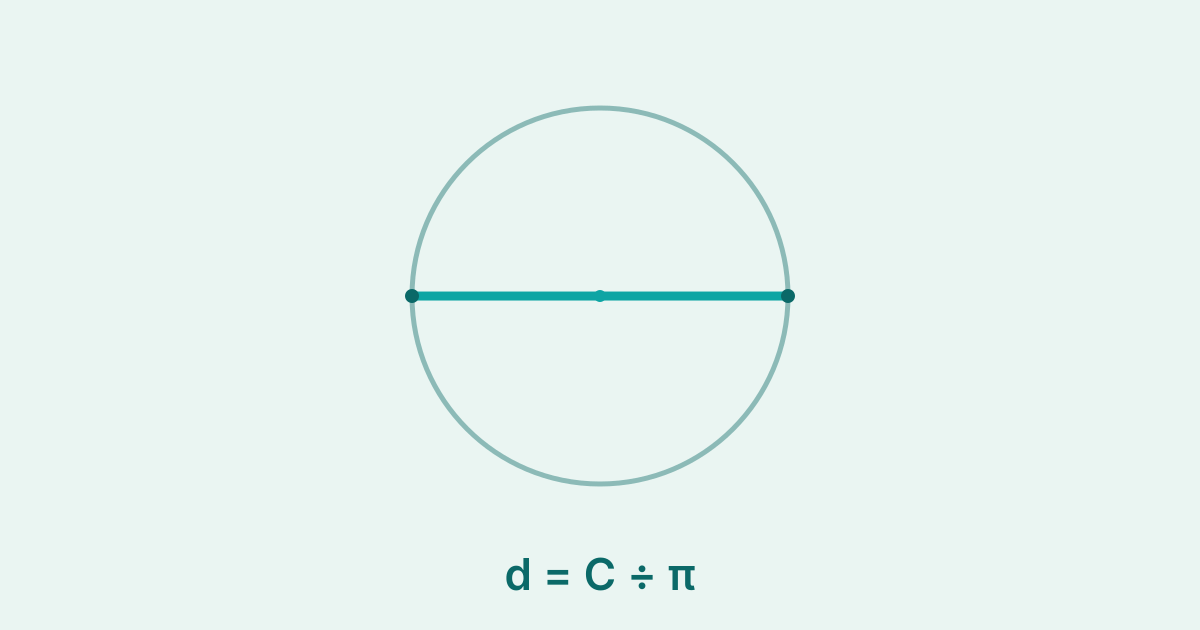
How to Find the Diameter From the Circumference
Reverse the circle formula to find diameter from circumference. The simple equation, worked examples, and a free calculator to do it instantly.
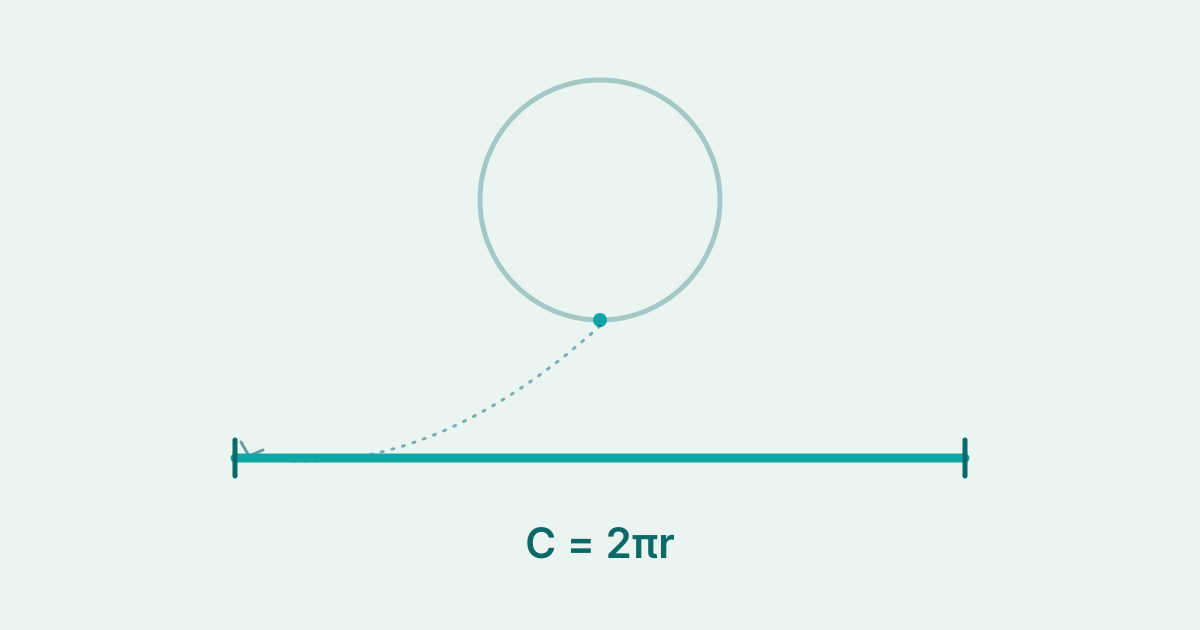
How to Calculate the Circumference of a Circle (4 Simple Methods)
Find the circumference of any circle from its radius, diameter, or area. Clear formulas, step-by-step worked examples, and a free calculator to check your answer.
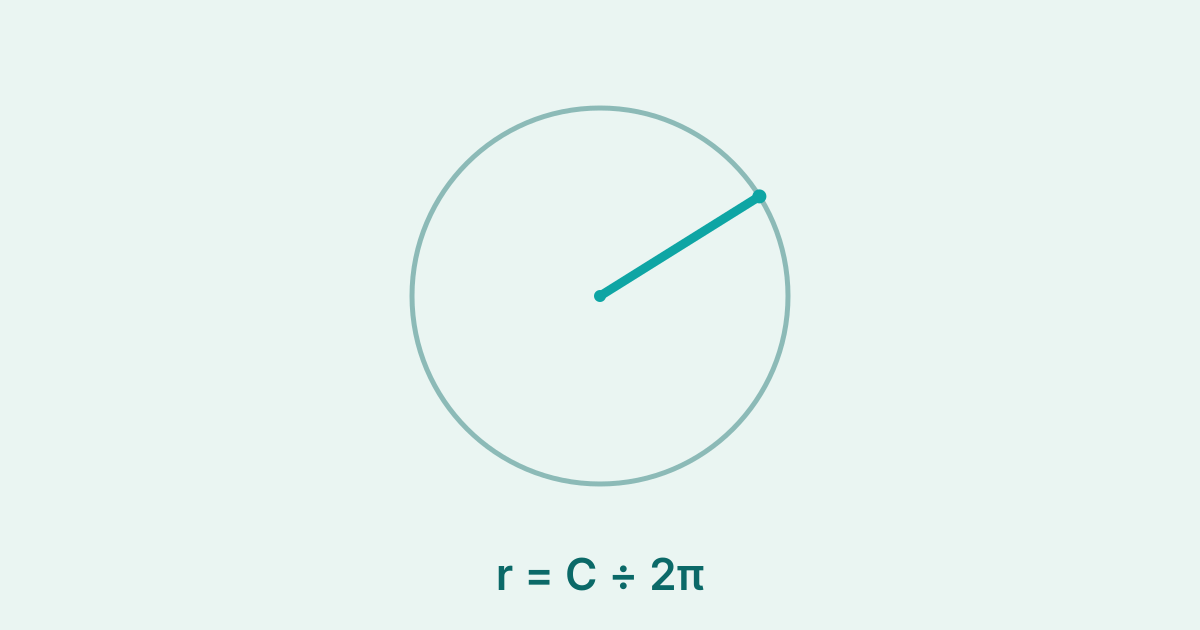
How to Find the Radius From the Circumference (With Examples)
How to find the radius from the circumference using r = C ÷ (2π). Simple steps and worked examples, plus a free calculator that does it instantly.