How to Find the Area of a Circle (Formula + Examples)
How to find the area of a circle using A = πr². Simple steps and worked examples for finding the area from the radius, diameter, or circumference — plus a free calculator.
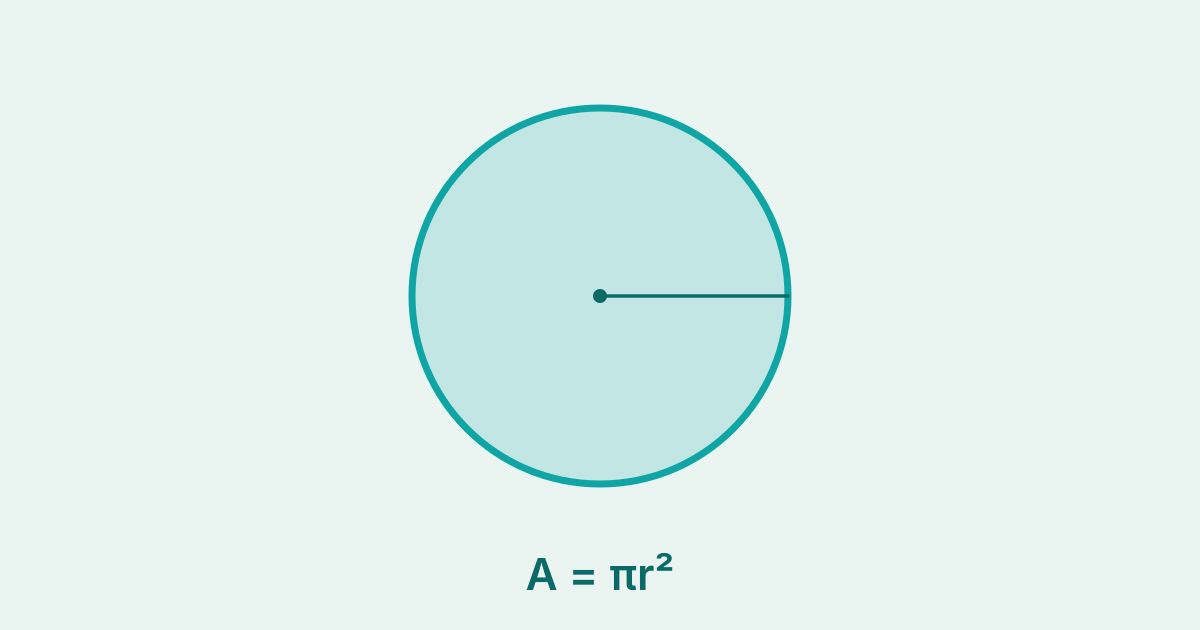
The area of a circle is the amount of space inside it, and you find it with one short formula: A = πr² — pi times the radius squared. If you know the radius, the area is a single step away. If you only have the diameter or the circumference, you first work out the radius, then use the same formula. Here’s exactly how to do each one, with worked examples.
The formula: A = πr²
There are only three things in it:
- A is the area you’re solving for.
- r is the radius — the distance from the centre of the circle to its edge.
- π (pi) is a fixed number, roughly 3.14159.
“Squared” just means multiply the radius by itself. So the whole job is: square the radius, then multiply by pi.
Find the area from the radius
- Multiply the radius by itself (r × r).
- Multiply that answer by π (≈ 3.14159).
Example — radius of 5 cm:
- 5 × 5 = 25
- 25 × 3.14159 ≈ 78.54
So the area is about 78.54 cm². Notice the answer is in square centimetres — area is always in square units.
Find the area from the diameter
The diameter goes all the way across the circle, and the radius is exactly half of it. So halve the diameter to get the radius, then use the same formula:
- r = diameter ÷ 2, then A = πr²
Example — diameter of 10 cm:
- r = 10 ÷ 2 = 5
- A = π × 5² ≈ 78.54 cm²
Find the area from the circumference
The circumference is the distance all the way around the circle. If that’s all you’re given, first find the radius, then the area:
- r = circumference ÷ (2 × π), then A = πr²
Example — circumference of about 31.42 cm:
- r = 31.42 ÷ (2 × 3.14159) = 31.42 ÷ 6.28318 ≈ 5
- A = π × 5² ≈ 78.54 cm²
(All three examples above describe the same circle — one with a radius of 5 — which is why the area comes out the same every time.)
Quick reference
Area for a few common radii (using π ≈ 3.14159):
| Radius | Area |
|---|---|
| 1 | 3.14 |
| 2 | 12.57 |
| 3 | 28.27 |
| 5 | 78.54 |
| 10 | 314.16 |
Do it instantly
You don’t have to work through the maths by hand. Our free circle calculator gives you the area, radius, diameter, and circumference the moment you type in any one value — with unit conversion built in.
Frequently asked questions
What is the formula for the area of a circle?
A = πr² — pi multiplied by the radius squared. Square the radius, then multiply by π (about 3.14159).
How do you find the area of a circle with the diameter?
Halve the diameter to get the radius (r = diameter ÷ 2), then use A = πr². A diameter of 10 gives a radius of 5 and an area of about 78.54.
How do you find the area of a circle from the circumference?
First find the radius with r = circumference ÷ (2π), then use A = πr². A circumference of about 31.42 gives a radius of 5 and an area of about 78.54.
What is the area of a circle with a radius of 5?
About 78.54 square units: 5 × 5 = 25, and 25 × π ≈ 78.54.
Why is the area measured in “square” units?
Area measures a flat, two-dimensional surface, so it’s always in square units — square centimetres (cm²), square inches (in²), and so on — even though the radius itself is a plain length.
Related posts
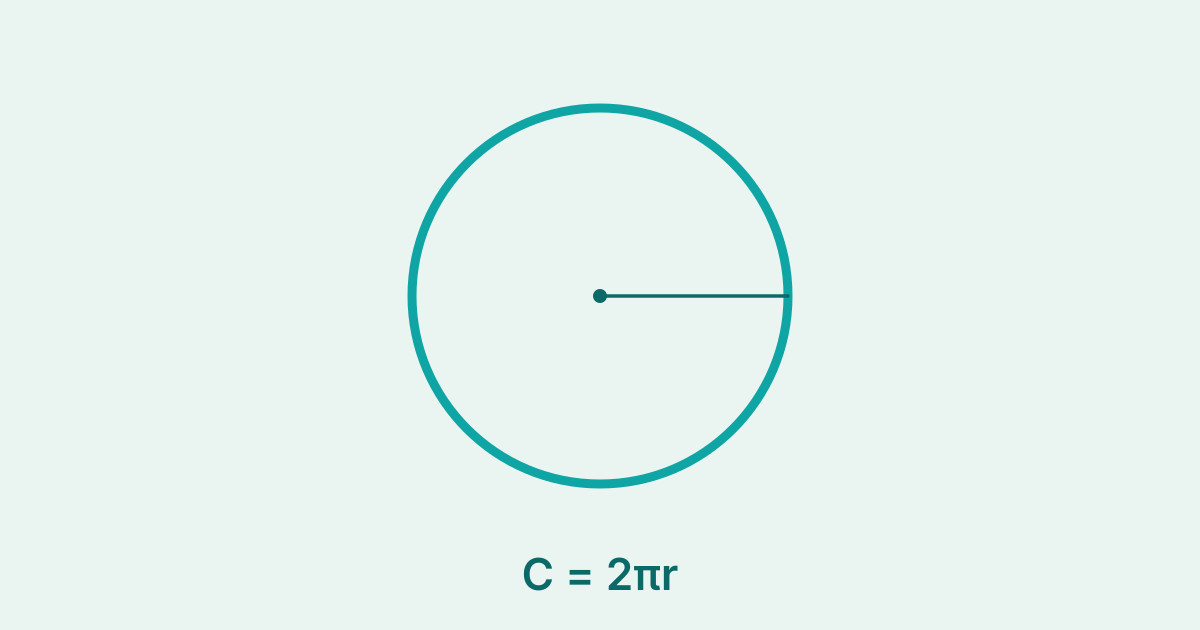
The Circumference Formula Explained: Where C = 2πr Actually Comes From
A clear, illustrated explanation of the circumference formula, the role of π, three common variations, and how to use the formula in real-world problems.
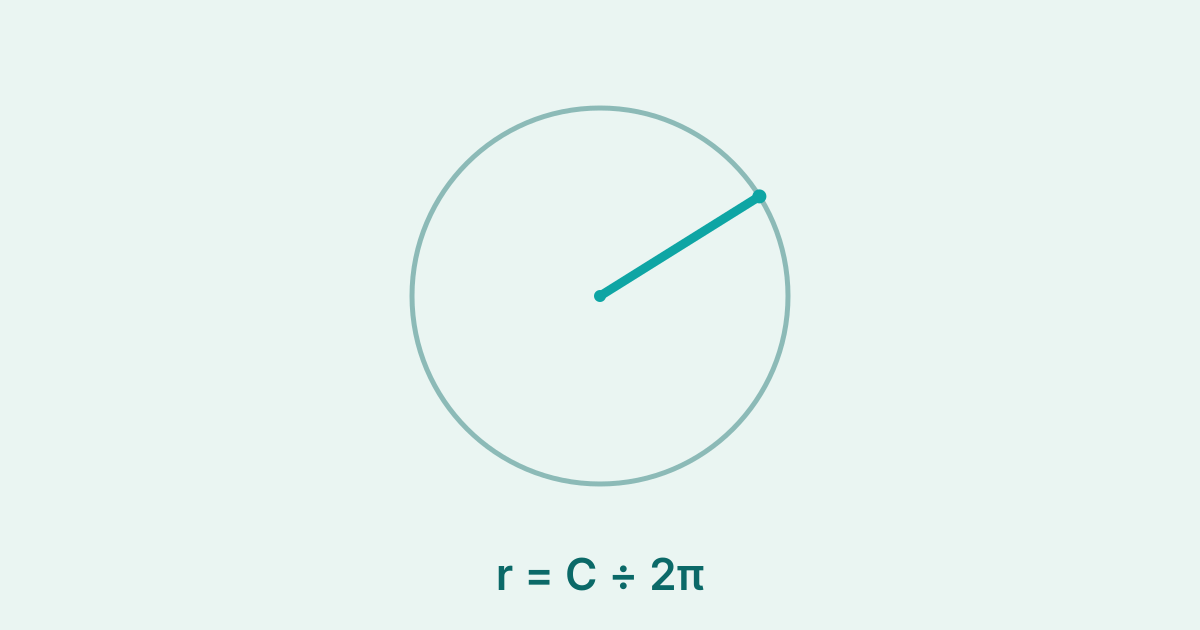
How to Find the Radius From the Circumference (With Examples)
How to find the radius from the circumference using r = C ÷ (2π). Simple steps and worked examples, plus a free calculator that does it instantly.
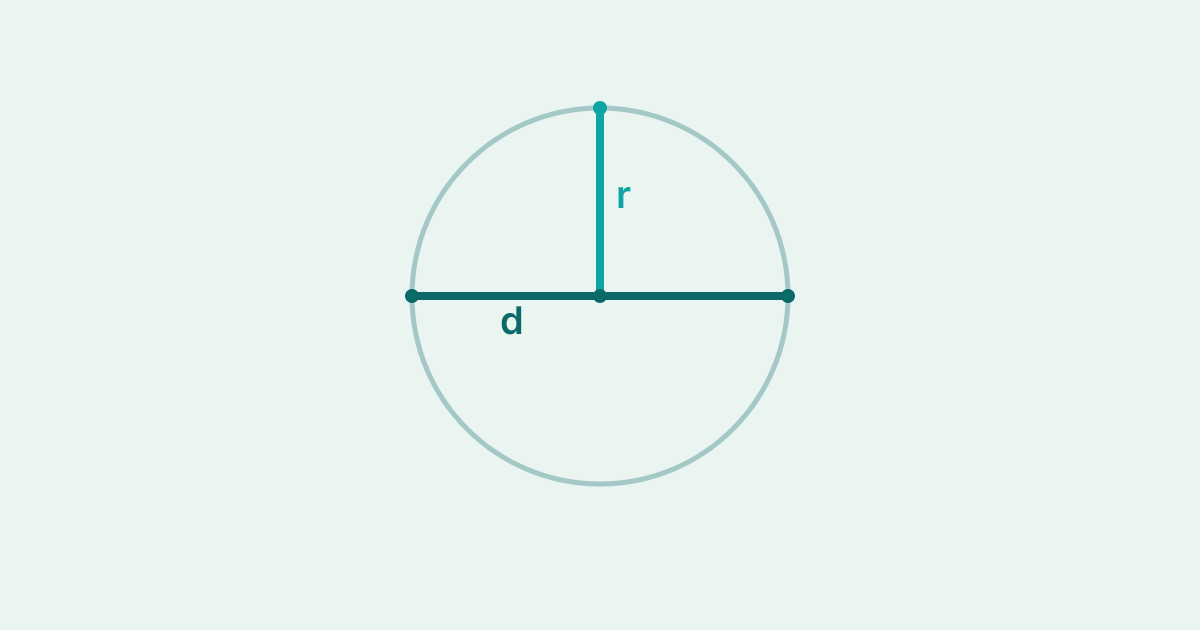
Radius vs Diameter: What's the Difference?
The difference between the radius and diameter of a circle, how to convert between them, and simple examples. Plus a free calculator for radius, diameter, circumference, and area.